
What good maintenance helps preserve
Inspect before treating
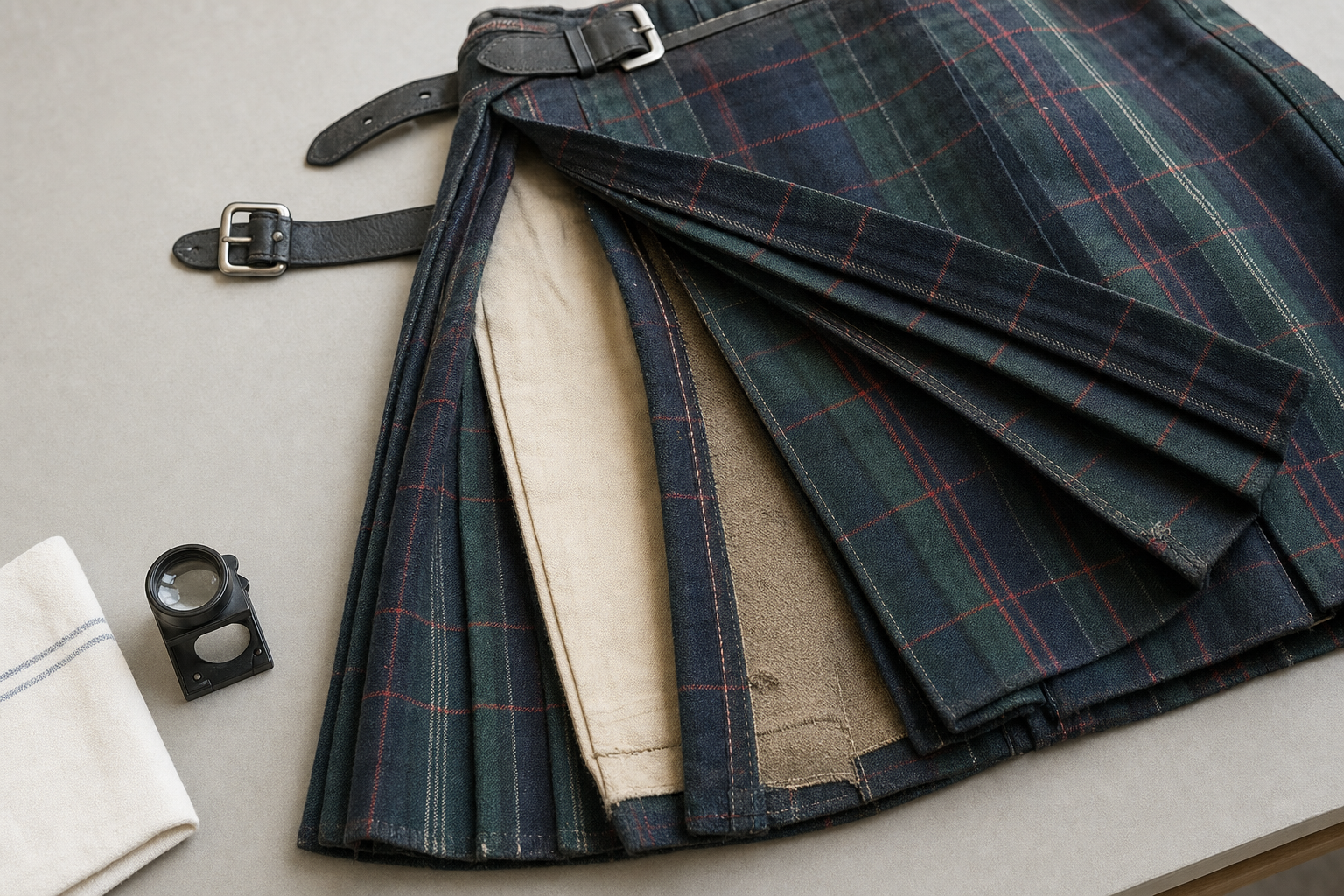
The kilt is checked properly before any cleaning route is chosen.
Recover shape and finish
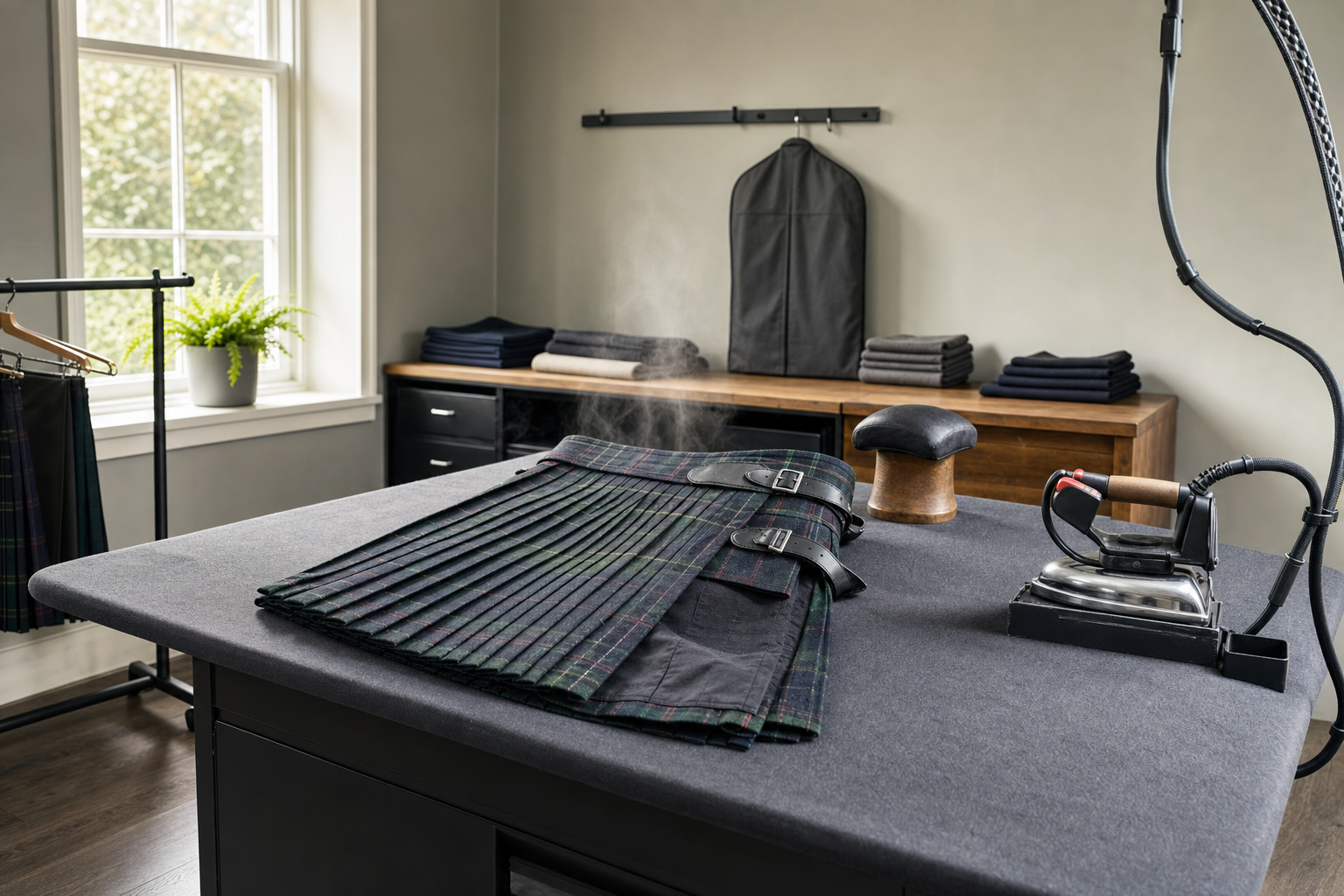
Pressing and reshaping can matter as much as removing marks.
Aftercare that helps at home
Simple storage advice can protect the garment between uses.
A wool kilt needs more than surface cleaning
A wool kilt is not something to treat like ordinary occasion wear. From the workshop of R & I Macdonald Kilt Makers in West Calder, we begin by assessing the whole garment before any cleaning is planned, looking at pleats, linings, straps, buckles, areas of wear and anything that may affect the safest treatment. Customers usually come to us because of marks, odours, softened pleats, loose stitching or worn fastenings, but surface appearance is only part of the picture. The structure underneath matters just as much if the kilt is to keep its shape.
Cleaning, reshaping and aftercare guidance
Good kilt care often combines more than one step. With R & I Macdonald Kilt Makers, the work may include appropriate cleaning, reshaping or pressing, minor maintenance and a final review of the garment's condition before it is returned. We can also advise on simple aftercare such as airing, dry storage, preserving pleats and protecting wool between occasions. When cleaning, maintenance and repairs are considered together, an existing kilt usually looks better and keeps working harder for longer.
Frequently asked questions
Why does a kilt need specialist cleaning?
A kilt is a structured wool garment, not just a flat piece of cloth. Pleats, linings, straps, buckles and worn areas all need checking before any cleaning method is chosen. Treating it like ordinary occasion wear can affect the shape, the finish or the construction.
Can cleaning be combined with repairs?
Yes, and it often makes sense to review both together. If loose stitching, tired pleats or worn fastenings are obvious during inspection, we can discuss maintenance or repairs at the same time rather than sending the kilt back improved in one way but ignored in another.
How should I store my kilt afterwards?
Airing it after wear, keeping it dry and helping the pleats hold their shape all make a difference. Once the garment has been cleaned or maintained, we can advise on practical storage steps so the wool stays protected between occasions and the kilt is easier to bring back into use next time.